6/5/10

Infectious Ideas: Using Antimicrobial Copper Alloys in Hospitals, by Alice Ro

CDA-figure-8.jpg
CDA-figure-6.jpg

Top: Hospital room with sani-station and touch-point hardware: grab bar, faucet, and light switch. Bottom: Sani-station in hospital lobby.

Copper Touch is a system of antimicrobial touch-point hardware and sani-stations (alcohol gel dispensers) designed to be deployed in hospitals to reduce infection. The system kills germs in areas people are most likely to touch while addressing some of the behavioral challenges of infection control: hand-washing and cleaning surfaces. The products also showcase the newly-proven antimicrobial properties of copper alloys; the sani-stations act as communication points to brand the material at the place where germs are top of mind.

The project began when the Copper Alloy Association (CDA) approached us at Pensa with the problem of encouraging hospitals, CDA's target market, to adopt copper alloys. Studies proving that these materials kill microbes faster and more effectively than any other antimicrobial material on the market and an EPA registration permitting health claims about these properties were not enough, so the CDA asked that we identify and design compelling hospital products that would inspire designers and manufacturers to use copper alloys wherever there was a need to fight infection.

Consistency, patient compliance, and error avoidance are all crucial factors in effective delivery of a therapy. This is the space where we excel: applying an understanding of human behavior to create solutions that work within our imperfect world.

To develop a solution, we first had to understand the challenges of infection control in hospitals and the experiences of a range of hospital stakeholders, including infection control officers, cleaning staff, administrators, doctors, nurses, patients, architects, and facility managers.

CDA-figure-1.jpg

Antimicrobial effectiveness: copper vs. the competition. Copper alloys have also been proven to kill Staphylococcus aureus, Enterobacter aerogenes, Pseudomonas aeruginosa, and E. coli, in under two hours.


Design and medical science
The number of Americans who die every day from hospital-aquired infections (HAIs) is equivalent to one jumbo jet plane crashing every day, according to Donald Wright, MD, MPH, of the US Dept. of Health and Human Services. Surely, there would be an uproar if our society allowed for such continuing aviation disasters, but HAIs just don't have the same prominence in public awareness. Hospitals are under a lot of pressure to rectify the situation—pressure that includes the cessation of Medicare payments in cases of HAIs and several state laws mandating transparency or reporting of HAIs—but fixing the problem is a struggle. The problem of the quantity of infections is compounded by antibiotic resistant "super bugs," created by the overuse of antibiotics.

CDA-figure-2.jpg

In a real hospital room, it's quickly obvious that microbes on surfaces aren't the only issue. How many people touched this table? How does it get cleaned?

"The tasks of medical science fall into three buckets. One is understanding disease biology. One is finding effective therapies. And one is insuring those therapies are delivered effectively. That third bucket has been almost totally ignored." —Peter Pronovost, pioneer of medical checklists

Through the work of Peter Pronovost, we came to understand that infection control is largely an issue of effective implementation. The medical establishment already knows how to prevent infection in an ideal world (hand-washing, for example), but they struggle to implement that knowledge effectively in the real world. Even beyond infection control, the issue of effective delivery is one of the major challenges in healthcare today. Consistency, patient compliance, and error avoidance are all crucial factors in effective delivery of a therapy. Fortunately for designers, this is the space where we excel: applying an understanding of human behavior to create solutions that work within our imperfect world. This is what we needed to achieve with copper: the CDA has already shown it kills microbes (effective therapy), but the key issue for us was effective implementation.


Wash your damn hands!
To help us identify what products most needed an antimicrobial surface, we spoke to many infection control officers. But time and again, as we tried to get an inkling of where copper alloys would be most beneficial, they responded with a variation of "That's nice, but we wouldn't need it at all if people would just wash their (damn) hands!"

CDA-figure-3.jpg

Hand washing is the top weapon against the spread of infection.

What is the big deal about hand washing? Yes, it's key to preventing the spread of microbes, but why the frustration? It seems simple to do. But, the infection control profession has tried every educational method under the sun and papered hospitals with reminder posters, and compliance rates are still not sufficient. It became clear to us that the infection control officers' priority isn't a new technical solution (antimicrobial material), so much as a better behavioral solution.

Each piece of equipment has its own cleaning protocols, different people are responsible for different objects, and the systems for letting staff know whether an object has been cleaned are far from fool-proof.

This brought us back to the idea of design playing a crucial role in effective implementation—in this case, of hand-washing. Design changes have already proven quite effective at improving compliance. Architects practicing Evidenced Based Design—a movement in health care design that emphasizes measuring the impact of design interventions on patient outcomes and building on the results— showed that strategic placement of hand sanitizer dispensers and sinks leads to more hand washing. Maybe our solution could improve compliance in a similar way through product design.


Cleaning chaos
When observing hospital cleaning staff, we discovered that they deal with a surprising amount of complexity. Each piece of equipment has its own cleaning protocols to ensure it isn't damaged, different people are responsible for different types of objects (furniture vs. personal electronics vs. highly specialized medical technology), and the systems for letting staff know whether an object has been cleaned are far from fool-proof. This complexity leads cleaning managers to resist the introduction of new materials that require any special care, like polishing. We also found that cleaning, in general, is not very effective. Study after study showed dangerous microbes left behind even after thorough attention. It's another area in which hospitals are exerting a lot of effort but getting spotty results.

CDA-figure-4.jpg

An improvised way to track if something needs to be cleaned.

Of course, copper alloy products would still need to be cleaned, but if we used low tarnish alloys, we could ensure that the cleaning staffs' work load would be unchanged. Cleaning could be made even easier by using only smooth, wipeable shapes. A distinctive look could be used as a reminder of key places to clean, like a visual checklist.

Infection control professionals realized that, while neither cleaning, handwashing, nor antimicrobial materials are enough on their own to prevent the spread of infection, combining tactics is very effective. They created "bundles," checklists of tasks that prevent infection together. Like bundles, our product(s) needed to work in a combination of ways to be successful.


Copper's tenacious mythology
The silver color on a quarter is a copper alloy—but hardly anyone knows it. In fact, nearly every designer and engineer we spoke to said the same thing about copper alloys: they're not hard, not strong, they tarnish, and they look old-fashioned. Architects feared using copper would result in a 'steampunk' hospital. But in fact, there are registered copper alloys that resist tarnish and rival steel in strength and hardness. These come in colors ranging from silver to yellow to red, and include nickel silver, brass, bronze, and copper nickel.

Copper and many of its alloys are already informally 'branded.' For example, copper is associated with electrical applications, cookware, and high quality plumbing, while brass is linked to sailing equipment. Our challenge was to create a new association with antimicrobial action while highlighting the material's unexpected capabilities.

Many administrators have come to recognize that the patient experience impacts outcomes; stressed patients recover more slowly. Ignoring the patient experience puts the hospital at a competitive disadvantage.


A patient's journey
Patients' perceptions of the safety of their hospitals, in terms of cleanliness, are based on the things they see during their first experiences there. Stefanie, a woman with an auto-immune disorder that required frequent infusions, described how her perception of one hospital was negative from the moment she entered the lobby. The dirty trash can beside the entrance immediately created a sense of mess and disorder. As she made her way through the hospital to the infusion department, she noticed all the doorknobs and elevator buttons she'd have to touch and worried about what germs could be growing there.

cda-figure-5.jpg

Trash can at a hospital entrance.

Fortunately, the hospital industry is beginning to pay more attention to the patient's point of view, diminishing unpleasant experiences like Stefanie's. Many administrators have come to recognize that the patient experience impacts outcomes; stressed patients recover more slowly. Ignoring the patient experience puts the hospital at a competitive disadvantage.


Copper Touch
Our insights and analysis led to Copper Touch (
pdf), a system of touch point hardware—doorknobs, light switches, grab bars, wall guards, drawer pulls, etc.—punctuated with sani-stations dispensing alcohol gel. Imagine how different Stefanie's experience would be if she went to a Copper Touch hospital: When Stefanie first enters the hospital lobby, she sees a standing sani-station. She uses some hand-sanitizer and germs naturally come to mind. This makes the sani-station the perfect place to inform her about the importance of hand cleaning, antimicrobial copper alloys, and the safe-to-touch hardware throughout the hospital that shares the same style and logo. As she walks throughout the hospital, she sees more sani-stations on the walls that enable her to clean her hands and that remind and enable others to clean their hands as well.

CDA-figure-7.jpg

Hall with wall sani-stations and touch point hardware: doorknobs, wall guards, push plates, and elevator buttons.

This approach is in line with the Broken Window Theory, which posits that shoddy environments encourage shoddy behaviors like vandalism, while well-cared for environments encourage good behavior. The cohesive look of the Copper Touch hardware serves to create an atmosphere that is conducive to best practices and keeps hand cleaning in the forefront of the minds of staff, visitors, and patients like Stefanie. It also provides Stefanie with a sense of security, knowing that this hospital has given infection prevention top priority.

CDA-figure9A.jpg
CDA-figure9B.jpg

Assorted Copper Touch hardware, made mostly of nickel silver ( a copper alloy that has a steel-like finish) with details in copper nickel (a pale peach alloy) to remind users of the copper content.


Design for health
This project was initially conceived with laboratory science addressing efficacy while design would simply contribute style and appeal. But shifting the focus to the real goal of lessening HAIs allowed Pensa to hone in on the issue of effective implementation of this exciting material. While Copper Touch's antimicrobial copper alloys protect common hospital touch points, the cumulative impact of the system also works towards changing human behavior and increasing hand washing, addressing the issue that concerns hospitals most.

In a larger sense, Pensa's design concept, the Copper Touch system, illustrates how effective delivery of a therapy (which in this case is antimicrobial material) is as necessary to success as the effectiveness of the therapy itself. The healthcare industry is in need of improved delivery of all sorts of treatments, and the knowledge and approach of designers will be crucial to addressing this need.


Alice Ro is director of research and strategy at Pensa, a strategic design consultancy in Brooklyn. For more information about Copper Touch, download the project pdf here.

Theo Core77

New 1 Hour Design Challenge Launches TODAY! Theme: Gestural Interfaces

1hdc-gesturalinterfaces.jpg

In our newest 1 Hour Design Challenge, Core77 and Seattle-based design firm Teague ask you to design a provocative gestural interface, using an everday object as a starting point. Teague will donate $500 in the name of the first place winner to NPower Seattle and in the name of the second place winner to Project H Design. The first place winner will also be awarded an Arduino Kit, to make those interfaces real.

THEME:
Gestural Interfaces

DOORS OPEN:
May 5, 2010

DOORS CLOSE:
May 31st, 2010
11:59 PM PST

BRIEF:
Digital interfaces, while compelling and empowering, drive us towards a flatness that's disorienting and boring. We're losing the richness that makes the physical world so compelling. Worse yet, we're replacing intuitive interactions with poor substitutes in our effort to make everything 'fit' on screen.

This 1 Hour Design Challenge invites designers to come up with a meaningful counterpoint to the all-in-one interface of the screen. You are tasked with creating a simple but engaging interaction that does not rely on a screen for input or output. You are free to appropriate an everyday object or to create a unique piece of geometry, but your solution must invite the user to interact with information or their surroundings in a way that encourages discovery while delivering an element of performance.

1hdc-teague-diag.jpg

For example, in the diagram above, flipping over a chair switches an 'open' sign off. What if you could turn off your reading light by simply closing a book? What if your pen became heavier as you wrote larger checks? The best solutions combine object, ritual and context. What will yours be?

To learn more about the inspiration behind this challenge visit Teague.

HOW TO ENTER:
Participants must execute their design in only 1 hour, based on an honor system. Upload sketches, diagrams or hi-res photos and a brief text description of your design to the
designated submission forum. To discuss the challenge and the entries, visit the 1HDC discussion forum.

JURY:
Winners will be selected by Core77 along with Ben Collette, Adam Kumpf and Tad Toulis from Teague.

CRITERIA:
Judging will be based on degree of innovation, strength of concept and ambition of idea.

PRIZE:
The first place winner will be awarded an Arduino kit and Teague will donate $500 in their name to NPower Seattle. The second Place winner will receive a $500 donation in their name to Project H Design.

ENTER NOW!

1hdc-teague-lost.jpg
Theo Core77

5/5/10

CrankBrothers và phụ kiện xe đạp

0crankbrothers01.jpg

Cái đầu tiên đập vào mắt bạn là sự sang trọng toát ra từ những đường nét, từ bản thân vật liệu tạo ra chúng (thép, chromo tôi, nhôm dụng cụ,...). Có 5 kiểu bàn đạp ứng với 5 trường hợp sử dụng khác nhau: Eggbeater (xe đua), Candy (leo núi), Acid (đường trường), Mallet (đổ đèo), 5050 (chạy tự do).

0crankbrothers02.jpg

Ngoài bàn đạp, CrankBrothers còn cung cấp gần như đầy đủ các phụ kiện khác cho xe đạp như bánh xe, khung xe, yên xe hay ngay cả bơm tay và một số phụ kiện khác. Nếu muốn biết nhiều hơn bạn có thể truy xem thêm tại crankbrothers.com.

Theo Core77

3/5/10

Khay đá QuickSnap

Bạn thường rất khó chịu với các khay đá. Khó khăn để tách nó ra, rồi vấn đề trơn trượt có thể làm nó trượt đi và chúng ta sẽ có cảm giác như không thể điều khiển được nó. Muốn điều khiển được nó bạn lại phải chạm tay trực tiếp vào từng cục đá. Mệt mỏi thật!!!

Từ nay bạn sẽ không còn những khó khăn đó nữa với QuickSnap. Hãy quan sát bạn sẽ thấy được nó tiện dụng đến mức nào.
Nhà thiết kế: Graeme Davies cho Joseph Joseph.

QuickSnap

QuickSnap Easy-release Ice Cube Tray by Graeme Davies for Joseph Joseph

QuickSnap3

Theo Yankodesign.com


Vận chuyển hàng hóa với “ô tô con kiến”

Trong điều kiện thành phố đông đúc, công việc đơn giản nhiều khi lại tỏ ra hết sức phức tạp. Xe tải không thể đi vào tận các ngõ ngách và thường xuyên phải đứng ỳ trên đường phố hàng tiếng đồng hồ vì tắc đường.

Làm thế nào để khắc phục tình trạng này, vừa có thể vận chuyển những hàng hóa cồng kềnh, vừa cơ động giữa dòng xe cộ đông nghẹt? Xe “ô tô con kiến” là một đáp án khả thi.

Ô tô tải không nhất thiết phải to. Điều này đã được “xe ô tô con kiến” chứng minh. Đây có lẽ là dòng xe tải nhỏ nhất trên thế giới, rất phù hợp với điều kiện đường phố đông đúc.

Những chú kiến luôn khiến loài người phải ngạc nhiên và ngưỡng mộ về những khả năng diệu kỳ của chúng. Mặc dù có kích thước rất nhỏ nhưng chúng có thể nâng được những vật nặng hơn khối lượng cơ thể chúng gấp hàng trăm lần. Khả năng kỳ diệu này chính là nhờ cấu tạo cơ thể hết sức hợp lý của chúng. Chiếc ô tô kiến cũng được thiết kế trên nguyên lý đó.

Tuy có kích thước khiêm tốn, song ô tô con kiến có khả năng chuyên chở đáng ngạc nhiên.
Tuy có kích thước khiêm tốn, song "ô tô con kiến" có khả năng chuyên chở đáng ngạc nhiên.

Cabin của ô tô kiến chỉ có chỗ cho một người. Nhưng thùng xe rất cơ động, có thể được mở ra hoặc thu gọn lại tùy nhu cầu sử dụng.
Cabin của "ô tô con kiến" chỉ có chỗ cho một người. Nhưng thùng xe rất cơ động, có thể được mở ra hoặc thu gọn lại tùy nhu cầu sử dụng.

Tất nhiên, chiếc xe tải mini này không thể thay thế những chiếc xe tải thông thường. Nhưng trong điều kiện thành phố đông đúc thì chúng rất nhỏ gọn, phù hợp với tính cơ động cao và khả năng di chuyển đến tận các ngõ ngách.

Chiếc xe tải mini này có thể được sử dụng để vận chuyển tủ lạnh, tivi, bàn ghế và nhiều loại hộp cỡ trung bình khác.


Ngọc Biên (Theo novate.ru)

1/5/10

Velomobile speedforms and more

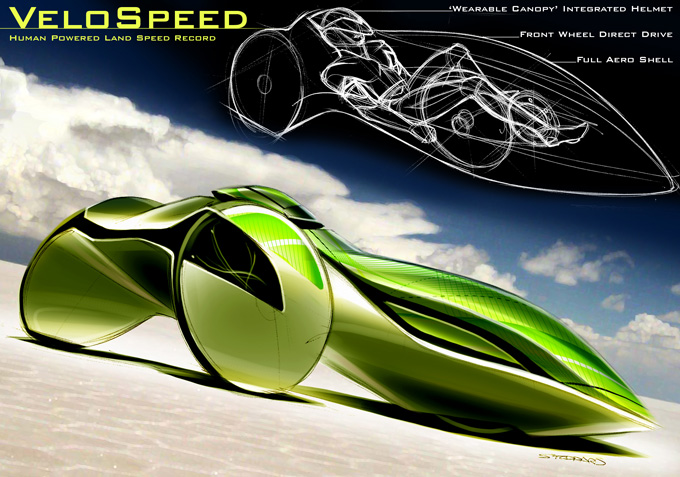
Velomobile concept from SpeedStudioDesign.comEric Stoddard of Speed Studio Design recentlyposted some nice velomobile sketches on his blog. One of his sketches is featured here, but follow the link to see the other two. Eric is an automotive and product designer based in Seoul, Korea, so that makes a perfect segueway into the next topic I want to mention.

The first annual Seoul Cycle Design Competition is currently accepting entries. They have three different categories; cycle-design, cycle fashion & accessories design, and cycling infrastructure. You can read more about the categories, and register to enter the competition, at this post on designboom. In each of the three categories, the organizers stress that “there should be an emphasis on practical designs that can be commercialized within five years.” It will be interesting to see how the entries reflect that.

I mentioned not long ago that Design Within Reach founder Rob Forbes recently started a new bike company. The New York Times has a story in their design section about Public Bikes, which like DWR will rely heavily on online distribution.

Abitare posted recently about free bike sharing in Milan during design week. Core 77 has an extensive photo gallery from Salone del Mobile in Milan. On the first page, you can see photos from Rossignoli’s vintage bicycle exhibition. Core points out that the “display of ‘found’ 19th century bicycles provided a delightful break from the more traditional wares at the furniture fair.”

Finally, I want to pass along a few links that are not design related, but I think are important to mention. Transportation Secretary Ray LaHood talked about a possible nationwide network of bike trails in a recent interview on NPR’s “All Things Considered.” Here you can read a transcript of that interview, which also featured DC Director of Transportation Gabe Klein. Secretary LaHood followed up with a post on his blog stating that bike infrastructure is what people want. Based on the questions that I so often hear from people these days about bike commuting, I think he is right.

I am really happy to see Oprah Winfrey speaking out on the issue of texting while driving. If you haven’t seen it yet, check out her recent op-ed piece in the New York Times. More information on the subject is available on the “No Phone Zone” section of her website, where you can sign a pledge to not text and drive. Distracted driving is an increasingly serious problem in the US, so I am really glad to have someone with Oprah’s influence speaking out on the issue. I never thought I would write these words in a Bicycle Design post, but thanks Oprah!

E-bikes from Lexus and VW

Bicycles from automakers are nothing new. Mercedes-Benz, Porsche, Ferrari, and BMW are just a few of the car companies that have offered bikes in the past. Some of the designs are better than others, but usually they are really just relabeled bikes that were designed and manufactured by another company. In many cases, the bicycles are just accessories added by the marketing department, not unlike the branded floormats, key chains, and little model cars that can found at the dealership or online.

The bike concepts that have recently been unveiled by Lexus and Volkswagen are a bit different though. Both of these new concepts are electric bikes, and they appear to have been actually designed for or by the companies the companies that are showing them. First we saw the “hybrid” Lexus bike, which features a carbon fiber frame, 8 speed internal gearing, and a 240-watt electric motor. That bike has been spreading all over the web this week with gadget blogs, design blogs, and automotiveblogs all picking up the story. On Twitter and cycling focused blogs, the reaction to the Lexus concept bike has been fairly negative (as you might guess). Sure, some of the apparent issues are pretty easy to criticize… the lack of a decent braking system or the inability to adjust the seat height just to name a couple. Even though I don’t personally love the design, I will state for the record that I am glad to see a concept e-bike from Lexus. The company says that they have no plans to put the bike into production, but the concept is getting way more mainstream press than a real e-bike from a bicycle manufacturer ever could. If a luxury car company can help to make the general public aware of hybrid e-bike technology, I say more power to them.

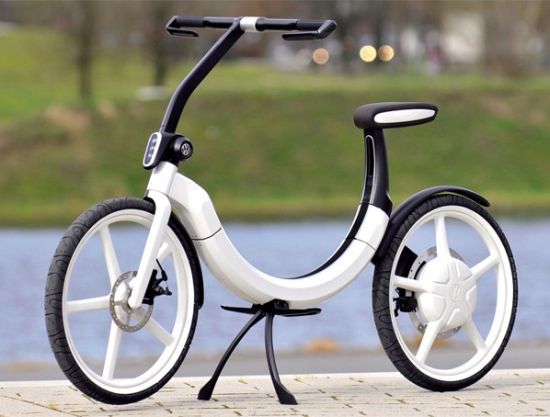
Unlike Lexus, Volkswagen plans to actually release the “Bik.e” concept that they just revealed at Auto China 2010. VW’s new concept bike has been getting a lot of coverage on the web too, but unfortunately their “Bik.e” is not a bike at all. It is really just a low range folding electric scooter that can be charged by the car’s DC current. The idea of a folding electric bike that can be used in place of the car for short trips is great, but this concept, which was designed to fold into a flat disc that can replace the spare tire in a car’s trunk, seems to be geared primarily toward emergency use. With a range of only 12 miles for the electric motor, it really seems like a provision for pedaling should have been included. Of course, if the motor runs out of juice, the stranded driver can always just hobby horse the “Bik.e” the rest of the way to the service station. At that point, I am pretty sure that he or she will be wishing for that old spare tire that the “Bik.e” replaced. Maybe I am being too hard on VW’s concept though; watch the video and let me know what you think.

While I am posting about electric bikes (and scooters), I will mention the first consumer magazine dedicated to the growing e-bike market. Velo Vision Ltd will debut the first issue ofElectric Bike magazine in August of this year. The magazine will be publicly launched on May 8th at the Tour de Presteigne Electric Bike Rally in the UK, so check that out if you are nearby. That is a bit too far for me to travel for the launch, but I am looking forward to seeing the first issue. If it is anything like VeloVision, I know it will be worth reading cover to cover.

bicycledesign.net

Bộ đồ nội thất linh hoạt

Được thiết kế cho mọi tình huống, với bộ đồ nội thất này bạn có thể sử dụng linh hoạt cho bất kỳ không gian sống nào trong nhà cũng như các văn phòng.

Thiết kế với hai nhân tố chính: ghế đệm và vách ngăn. Không chỉ để ngăn cách, các vách ngăn được sử dụng như một biển hướng dẫn, một điểm tựa để các mảnh có thể di chuyển. Các ghế bọc đệm và có hai chiều cao. Cái ngắn hơn, nhẹ hơn dùng để ngồi, trong khi phần cao có thể dùng như những chiếc bàn để máy tính xách tay và các thiết bị tương tự.

Với chuyển động linh hoạt của các vách ngăn và đôn ghế, bạn có thể tạo ra các khu vực chức năng với nhiều vị trí khác nhau một cách nhanh chóng và tiện lợi.

Dành cho các không gian sống bất kỳ, các phòng chờ và phòng thư giãn sinh hoạt hoặc hội họp... thiết kế dành cho mọi tình huống xã hội.

Thiết kế: Henrik Kjellberg và John Linkstrom (Thụy Điển).

V.N.A. (Ảnh: Yanko Design, o4i Designstudio)