9/1/11

Case Study: Humanair Air Purifier, by Peter Hall

Humanair.001.png

The Humanair

With its focus on the design of the comfortable workplace, it would seem logical for the ergonomic equipment maker Humanscale to turn its attention to the quality of indoor air. Indoor air is, according to the Environmental Protection Agency, one of the top five environmental health risks in the United States. But designing the air is no easy task. To clean the air of even one room is an energy-inefficient undertaking, constantly compromised by the fact that no room is sealed, and people bring in dirty air every time they open a door.

After four years in design development, and much longer in gestation, a desktop air purifier was launched by Humanscale at the end of last year. The Humanair makes an intriguing case study. The product went through several iterations in pursuit of Humanscale's hunch that a localized solution was considerably more efficient than cleaning the air of an entire room. Since people actually spend most of their indoor time in one spot (in bed, on the couch, or at a desk), clean air could be delivered to local "zones" around the user.

Humanair.002.png

Electrostatic precipitation (ESP) air cleaning

Humanair.003.png

Humanscale's "clean air zone" concept.

The technology itself brought its own challenges. Current systems use either the HEPA (high efficiency particulate air) or ESP (electrostatic precipitation) method of cleaning air. HEPA systems force air through tightly woven filters that trap particles, a method that is noisy--due to the drop in pressure caused by blowing air through a dense surface--and can be expensive, particularly if installed in centralized air conditioning and heating units. ESP systems first charge air in a "corona" field (high voltage, low current) before trapping the charged particles in some sort of conductive filter. This method proved highly popular due to its silent operation, but became plagued by controversy over claims by The Sharper Image about the performance of its ESP purifier Ionic Breeze. In fact, the entire air purifier industry was thrown into turmoil during the development of the Humanair after a court battle between Sharper Image and Consumer Reports culminated in bankruptcy proceedings for the retailer. Humanscale's product, which is based on the ESP technology, was taken back to the drawing board several times to ensure that it would bring something new to the genre, redefining the ESP category.

In essence, Humanscale set three goals: The new product had to be virtually silent (since it would sit next to the user); it had to be virtually breeze-free so as not to cause dry eyes (or distractions); and it had to produce no ozone. This last point proved to be particularly critical.

Humanair.004.png

Inventor Andrzej Loreth in his studio.

Origins
Andrzej Loreth, a Polish-born inventor based in Sweden, first began experimenting with air purifiers in 1994, when he discovered that it was possible to create an effective filter out of folded paper rather than the charged metal plates conventionally used in ESP-based purifiers. He also noted that the ozone gas produced as a by-product of charging the ions in the air was reduced to barely measurable amounts by using the paper filter, a lower current and larger ionization chamber. Ozone is useful in the earth's upper atmosphere for protecting us from ultraviolet light, but at ground level is an irritant known to damage human and animal respiratory systems. The EPA sets a safe ozone limit at 50 parts per billion.

Early Prototypes
One driving concern surfaced in the early stages of the project. Visiting Loreth's studio in Sweden in early 2007, Humanscale designer Stefan Spoerl observed that Loreth's air purifiers were hand-built and fine-tuned to achieve high performance; the size of the units was not a concern. For Humanscale however, conscious of the limited real-estate of the desktop, size was tantamount.

The design team began sculpting initial foamcore prototypes that suggested an 18-inch long lozenge shape would offer a discreet form for the desktop and house the three main components of the unit: two fans at the base, a charging chamber around a central high voltage corona wire, and at the top, the paper filter.

Humanair.005.png

Early concepts

Humanair.006.png

Early lozenge-shaped prototype. (2007)

Around the Spring of 2007, Humanscale presented the air purifier concept to curators from the Museum of Modern Art as a candidate for MoMA's then-upcoming future technologies exhibition, "Design and the Elastic Mind." Although the exhibition sought ideas and technologies rather than finished forms, Humanscale built a prototype suitable for a MoMA display, developing the lozenge shape with a fine exterior mesh intended to support circulation of air while expressing the unit's function. The prototype gained some early publicity for the project when the show opened the following year, even though subsequent iterations found the mesh patterns to be too restrictive and the lozenge shape inadequate for the performance criteria.

Humanair.007.png

Prototype exhibited at MoMA's "Design and the Elastic Mind" exhibition. (2008)

Change of Direction
By the Fall of that year, however, Spoerl and engineer Brad Augustine were having misgivings about the whole "small is better" premise. Whereas Loreth's larger units seemed to have no trouble cleaning large zones of air with the production of trace elements of ozone, as soon as the same technology was packed in a compact desktop unit, the performance went down and the ozone count went up. Spoerl and Augustine arrived at an internal meeting in October armed with their first real data from in-house tests with three different units. The clear performer in tests was not the tower or an evolved version of the MoMA prototype, but a round unit with a circular filter and two fans that Loreth had provided at an earlier date, but which had been rejected because of its relatively large size and conspicuous form. All three models performed with 99 per cent efficiency, but only the larger round unit could effectively clean a two-foot zone around the fan. This seemed to be entirely due to a larger filter surface. Where the smaller unit and the behind-monitor tower configuration were cleaning between 1.5 and 24 per cent of the air at a distance of two feet, the round unit was cleaning more than three times that, at 83 per cent.

Humanair.008.png

Humanair.009.png

Humanair.010.png

Humanair.011.png

Humanair.012.png

Tests of three different configurations: At a distance of two feet, the round unit (C) was cleaning more than 3 times the air than the others. (2007)

The Humanscale team made a decision to pursue the round form, but also to continue development of two additional units, a smaller and a room-sized version. The project was gaining momentum, as the designers sensed they had honed a mass-producible form, and began sourcing the plastic parts.

The nuances of air cleaning were sharply in focus now, since the team was already testing prototypes in off-site laboratories. Team member experience at bringing air purifiers to market stressed the importance of testing early for certification, and clarified which tests were widely recognized. Specifically, the Clean Air Delivery Rate, or CADR, introduced by the Association of Home Appliance Manufacturers in the early 1980s is used by all air cleaner manufacturers and recognized by Government agencies. It tests both the volume of air cleaned, how well it removes pollutants, as well as whether any ozone is produced in the cleaning.

CADR has its drawbacks: it does not measure unit size, power or noise in tests. Many manufacturers, particularly those using the HEPA method of air cleaning by forcing air through a tightly woven fiberglass filter, achieve high CADR at the cost of high noise.

Tests at this point included laying out the internal components of the purifier on a "breadboard" with transformers allowing minute adjustments in current and voltage. The goal was to achieve maximum cleaning efficiency with minimum current, but the extreme sensitivity of the system was proving perplexing, particularly when the components were moved into a housing. "The corona wire was quite variable," recalls marketing executive, Shane Cohan, "and there were also variations in wire thickness, humidity and power source to contend with. We were pulling our hair out."

Humanair.013.png

Testing components on a breadboard to fine tune between current and efficiency. (2008)

The project had reached a crossroads, one road moving toward production and the other going back to the drawing board. In favor of going forward was a strong sense of urgency and momentum, with Augustine and Spoerl booking ten CADR tests a day of its prototypes in a laboratory in Courtland, NY. But inconsistencies were still emerging between prototypes, and, back in Sweden, Loreth was making a new case for a unit with more fans.

New Direction
At certain eureka moments in design projects, Buckminster Fuller's notion of ephemeralization, or "doing more with less", seems a valid description of why one particular change works so well. At a point in mid-2008, Loreth delivered a radical change to the internal component array: instead of using a corona wire to create a charged air chamber inside the unit, he had returned to an earlier method of using a brush to create the corona field outside the unit. Air would be drawn toward the back of the unit, charged in the corona field, and the charged particles would attach themselves to the paper filter at the front. In this way, the unit could be made smaller while allowing the designers to increase the number of fans, thereby improving the CADR without adding noise or air turbulence.

The downside of Loreth's latest solution was that all of the regulatory work on the previous protoype would have to be scrapped, and the unit redesigned. On the upside, it turned out that using a brush had the effect of stabilizing the performance of the prototypes, so that the ozone count was consistently close to undetectable. Loreth's adjustment meant that the Humanair could improve its performance within a smaller unit, and potentially with less variables in the testing.

Spoerl and Augustine began developing new working prototypes, increasing the number of fans to three and finally four, in a grid arrangement behind the filter. Humanscale had committed to debuting the product at NeoCon of that year, and further CADR testing was scheduled to be soon underway. In the tests, the lessons of the previous round proved invaluable.

The concept prototype unveiled at NeoCon 2009 was by no means fully resolved but subtly hinted at the innovations inside: In plan view, the flat base of the unit suggested the exact perimeter of the corona field, which takes the shape of a jelly mold; in profile, the unit had the form of a letter "L." The base, initially articulated, allowed the user to adjust the angle of the device but this function was eventually dropped as unnecessary, which helped to save manufacturing costs.

Humanair.014.png

Prototype launched at NeoCon. (2009)

Final Design
After NeoCon 2009, the product took one last formal shift under the new design director Mark McKenna, to emphasize the circular geometry of the functions inside (the corona field and circular filter) and in accentuating its role as a housing for the filter, gain a streamlined, more sculpted edge. This, too, was in response to the question of how to make it easy for users to change the paper filter and VOC filter, which is required periodically.

Humanair.015.png

Final design launched at Neocon. (2010)

Humanair.016.png

Filter changing procedure.

In the final design, the front of the unit features a large circular grille that is opened by pressing a disk in the center. The disk mechanism solved several problems at once: Since the paper filter cannot be folded to the tightest point of its center, it has a ring shape, with a hole in the middle. This provided both a mounting and contact point and a place for the opening mechanism. Pressing the disk immediately activates a kill switch.

Considerable attention was paid by the design team to this one key interactive moment. Since it was important that the filter be easy to replace, it seemed unnecessary to have a strict orientation, that is, the circular outer grill had to be replacable in any orientation. For this reason, the Humanscale logo was eventually placed under the removable panel, rather than on the disk itself.

More Testing
A corporate decision to make all of Humanscale's low voltage products 24 volts DC, (an emerging industry standard) had the unexpected benefit of making the certification process for the new design easier. Several regulatory hurdles were circumvented by dropping to DC from AC, including the need to have flame resistant materials throughout. Less easy was troubleshooting the final design, since the Humanair's low current is transformed into high voltage of up to 5,000 volts inside the unit to create the corona field and attract particles. Comparable to static electricity, the high voltage created several unexpected challenges as the designers began to put together working prototypes. "We were used to dealing with standard electricity," says McKenna. "With this unit we're turning air into a conductor--we were inadvertantly creating small voltage fields all over the inside of the unit."

Tests of the prototypes were initially perplexing. "The units, when they were apart on the breadboard would work well but when we stuck them inside the housing they didn't work," says McKenna. "We spent a few intense weeks going through every single connection and checking it, learning about shielding, shortening power losses, the differences between glues."

For example, the designers realized that the axles in the small computer-style fans in the prototype were distorting the corona shape because they were metal. Placing small pieces of tape over the fans increased the unit's performance dramatically. At another point, the designers realized that a white glue used in the paper filter, even when dry, contained enough moisture to conduct electricity. "We replaced it with hot glue and went from five percent to a hundred percent performance," says McKenna.

Humanair.017.png

More troubleshooting: Hot glue provides the answer.

By September of 2009, with a robust prototype ready for production, the design team began finalizing part engineering and working with a new manufacturer on tooling. In February 2010, the product was ready for final certifications. Somewhat nerve-wracking was the fact that final certification of the product can only happen after it has been tooled up, leading to the possibility that any significant design changes required to pass certification would also require expensive tooling changes. Augustine notes that a wise strategy is to get to know testing labs well in advance of tooling. "Go early and go often," he says.

Final hurdle
While subsequent tooling stages through the early part of 2010 revealed fairly typical manufacturing issues, one problem emerged in the pilot run that summed up the unusual nature and sensitivity of the Humanair. The pilot unit, which arrived in April 2010, was not achieving optimum performance due to, it was discovered, a change in the manufacture of the paper filter. Closer inspection revealed that conductivity was being affected by the carbon content of the ink strip on the paper filter, and how the ink was applied to the paper. Augustine reflects that this last hiccup was endemic of the whole project, where many of the challenges were in translating an invention into a product. "It's a great example of what was so hard about this project. There's an inventor but it's our responsibility to bring it to production. We never had a discussion with the inventor about how thick the ink should be."

Humanair.018.png

Troubleshooting the ink to control conductivity in a high-voltage environment.

Conclusion
With few exceptions, corporate marketing strategies rarely involve detailed accounts of a product's development. In the case of the Humanair, however, the dogged pursuit of a singular vision--of a small, silent, energy efficient unit that cleans the air without adding noise or pollution to it--makes a compelling design story. Perhaps the home truth of the product's four-year development is that achieving a simple goal takes a great deal of effort.

Peter Hall is senior lecturer in design at the University of Texas at Austin, where his research focuses on mapping as a design process. He has written widely about design in its various forms, including gaming, elevators, bridges, neon lights and office chairs, for publications including Metropolis, I.D. Magazine, and The Guardian. His books includeElse/Where: Mapping (2006), Tibor Kalman: Perverse Optimist (1998) andSagmeister: Made You Look (2001). Since 2006 he has been Vice President and co-organizer of DesignInquiry, a non-profit educational organization devoted to researching design topics at intensive, team based gatherings.

Eames Powers of Ten Video Response Competition Deadline Extended!

powersoften_extended.jpg

We realize with the holidays and all that some people need a bit of extra time to complete and upload their videos, storyboards, and sketches, so we're extending the to the deadline to the Powers of Ten Video Response Competition to February 2nd. (That's nicely 2/2/11 in the spirit of things). If you'd like to participate there's plenty of time to create, post, comment or vote.

Here's the URL to jump right in: http://bit.ly/fIeyUe

The Jury winner gets:

- $2,000 cash
- Eames Molded Plywood Lounge Chair (Value $1,250)
- $2,000 donation to the Eames Foundation in the name of the winner (includes a tour of the Eames House; travel not included)
- In addition, to watch and read from their Eames chair, the Grand Prize winner will also receive:
- A boxed set of volumes 1 through 6 of the Eames Films; Including of course Powers of Ten, among over 40 films
- A vintage copy of the Eames Office book 'Images of Early America'
- A copy of 'The recent 100 Quotes by Charles Eames'
- An Eames Primer by Eames Demetrios

The Popular vote winner gets:
- $1,000 in cash
- Eames Molded Plywood Lounge Chair (Value $1250)

Those are some sweet prizes!

On the jury, we've got Eames Demetrios, Paola Antonelli, Adam Bly, Ayse Birsel, Gary Hustwit, and Allan Chochinov. Find the brief and all details here: http://bit.ly/hEa5kK.

And to inspire you, we've chosen 5 of the latest entries so far. Just click the image to load up the video (sorry, embeds next week:)


The delightful (and labor intensive) The Night Before 10/10 by giltastic
10xgiltastic.jpg


The provocative Power of Ten Days by sgthackston
10xSgthackston.jpg


The very clever Powers of Proportion by jasonamorris
10xJasonamorris.jpg


The irresistible The Powers of X by designpanda
10xDesignpanda.jpg


And the irreverent (and kinda brilliant) Nest of Power by jhhl
10xJhhl.jpg

Get in the game and we may feature your's in an upcoming blog post!

The Product Design Show launches (Ep. 1, Bicycle Design)

Yesterday Engineering.com launched The Product Design Show, a web-based program looking at the design of consumer and industrial products. As the website's name suggests, the show is geared more towards engineering than industrial design, but it's cool nonetheless.

Episode One is on "Designing a Better Bicycle," and future installments will cover power tools and food processing equipment. Best of all, it will air regularly (every Thursday). Today's a Friday, so steal some time to check it out:


Core77

7/1/11

CES 2011 Part 1

I’m as giddy as a school girl at CES because I’m literally going to be living in the future for the next few days. The annual Consumer Electronics Show has so many products to offer that I’ll just play curator. Hit the jump!

Exhibition: CES 2011 Part 1

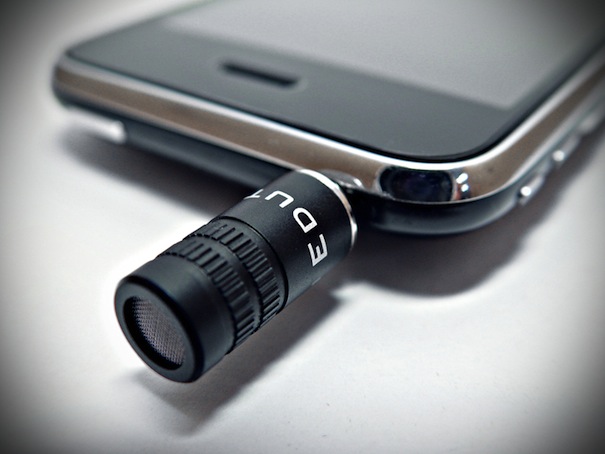
GOBIZ i-Microphone is so small you might miss it at CES but good things come in small packages. This little doohickey packs some powerful mic tech and records 12dB louder. Perfect for mobile devices like the iPhone for recording lectures or on-the-fly interviews. Also compatible with pretty much anything with a 3.5mm jack.

Microsoft unveiled Surface 2.0, their smart table that takes touch interaction to a new level. What’s new? Pixel Sense, the ability to recognize almost anything touching the surface right down to the pixel. Amazing to put a business card down and watch the “surface” instantly digitize.

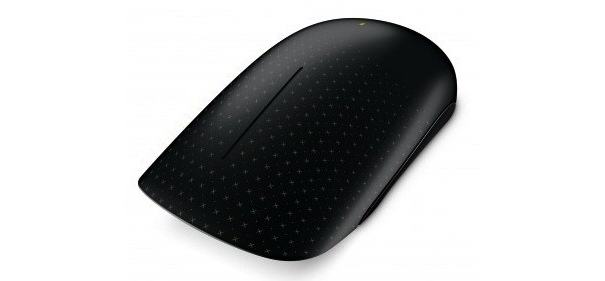
The Microsoft Touch Mouse is basically an Apple Magic Mouse. The entire surface is devoid of buttons and is covered in a matrix of capacitive touch-sensing electrodes. The new mouse supports gestures including a few new tricks like pinch-and-zoom. Available this June for $79.95.

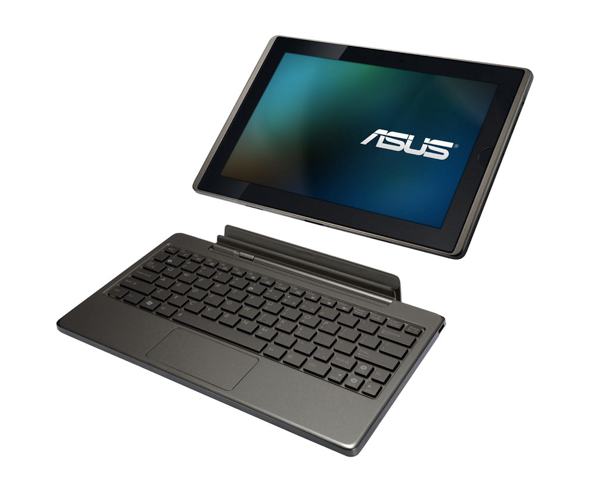
Asus Eee Pad Transformer won’t come to life and demand energon but it does come with a removable full size keyboard. The tablet runs Android 3.0 Honeycomb which is Android mobile optimized for tablets. 32GB SSD, 1GB memory, Tegra 2 processor, 2 camera video cameras, 16 hour battery life, and a partridge in a pear tree.

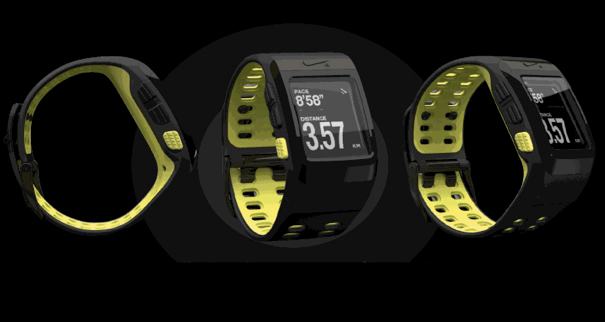
I’m an avid Nike+ user but having my iPhone strapped to my arm while running makes me feel like a total douchebag. The Nike+ SportWatch replicates all the functions of traditionally pairing a shoe sensor with an iPhone into a sleek watch but with the added benefit of GPS thanks to TomTom so you can actually map your runs.

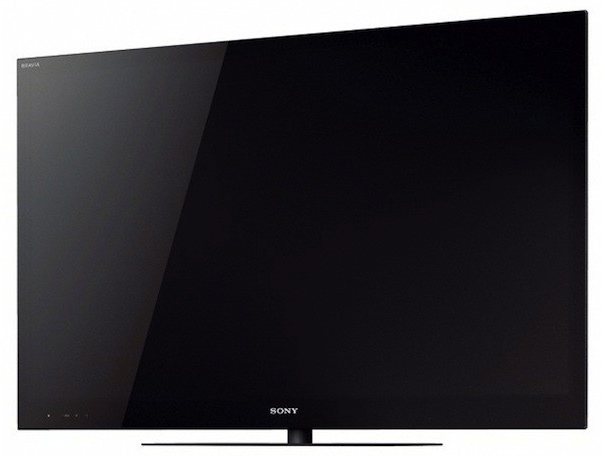
If Sony had a VOGUE cover it would read “Thin is In and 3D wins.” The company’s industrial design prowess is clearly on display with a total of 27 TVs making their way to the market. The gorgeous ones share Sony’s Monolithic design language with minimal buttons, sharp angles and all draped in the color black. The new sets feature Gorilla Glass, backlight LED tech, remote apps that can be downloaded on iPhones and Android devices, and a whole host of internet connectivity.

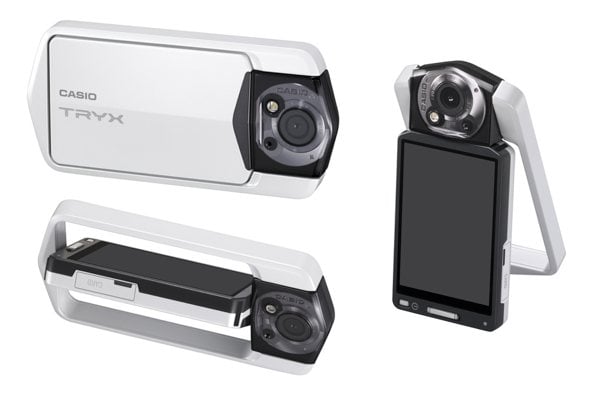
It can be hard to differentiate yourself in the pocket cam market but Casio has managed to do so with the Tryx. The entire camera swivels and rotates inside a body frame doubling as a stand which could make for some interesting shots. The touch screen has the usual goodies like touch focus but the lens is some kind of magic. The tiny 12.1MP SMOS sensor shoots 1080p video inside a wide 21mm lens. THANK YOU Casio! Available this April for $250.

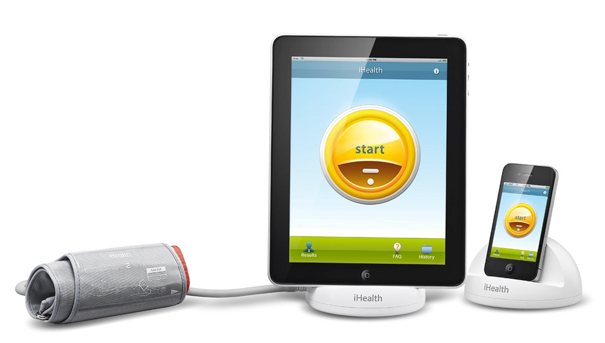
Apple announced 3rd party accessory support in 2009 but I haven’t really seen many compelling products since. The iHealth Blood Pressure dock saves me a trip to the pharmacy by letting me check my blood pressure in the comfort of my home. The accompanying app is quite beautiful and easy to use too.

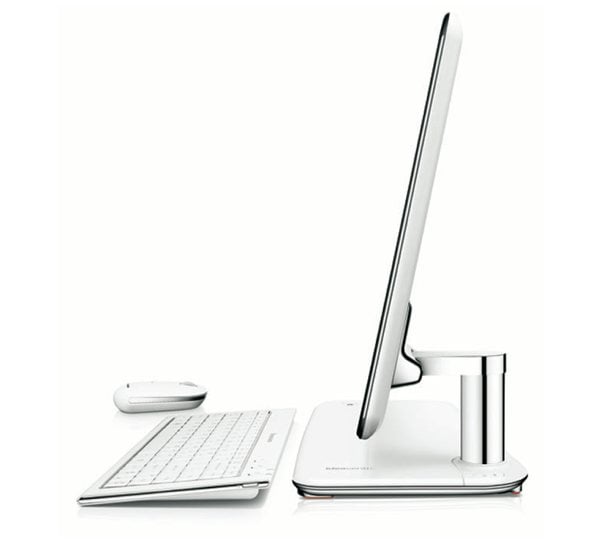
Lenovo intends to keep the “World’s Thinnest Desktops” award they’ll probably do so thanks to the IdeaCentre A320. The specs aren’t anything to write home about but the design is quite nice if not a bit contrived. Available this June for $700.

Android 3.0 Honeycomb running on T-Mobiles new G-Slate tablet. Big UI improvements for Android but there’s something still too geeky underneath it all. I don’t know, it just doesn’t feel as inviting to use.

An Analog Fan

I often like to guess what concepts are before reading descriptions because I enjoy the surprise in being totally off-base. This Analog Fan uses an old trick with gears and pulleys to generate enough power for 5 minutes of hair blowing wind. Not meant to cool a room down but it keeps air moving and all without electricity. By the way, I originally thought it was a clock.


Designer: Luc van Hoeckel


One Ring to Peel Them All

One can never have too many peelers because none are created equal. The Companion Ring Peeler slips onto the index finger. The outer ring peels the skin as you drag it across an apple. Will this form be good enough for tough skin fruits and veggies? Doubt it, but it looks like a practical companion for picnics and traveling. Will I buy one? totally!

Designers: Qing Ji and JiaYue Wu

Lock Thy Knife and Throw Away the Key

Wait a minute there is no key involved here in the Knife Locker. Apparently the knife itself is the key. It locks into position with a 270-degree counterclockwise turn and kick starts the UV sterilization process. Ready for the next use, bright and shiny! That sleek house will look good on any kitchen counter, what do you think?

Designer: Min Seong Kim

Core77 Announces Autism Connects, an International Design Student Competition!

AutismConnectsOpens.jpg

Core77 & Autism Speaks are proud to launch Autism Connects, an international student design competition to help individuals with Autism Spectrum Disorder (ASD).

The Challenge
Design students are invited to produce new and innovative technology-based solutions to assist individuals with ASD in their communications with others and, in doing so, to increase the public's understanding of this unique and growing population.

Special Jury Award
The jury will award a grand prize of $5,000 to one individual or team. In addition, Autism Speaks will award creators (or one representative in the case of a team entry) of the top three designs a $1,000 stipend and registration fees to attend the 2011 International Meeting for Autism Research, to be held May 12 to 14, 2011 in San Diego, CA, where they will be invited to present their design concept.

Popular Vote Prize (Community Prize)
$1,000 - First Place
$500 - Second Place
$250 - Third to Sixth Place

Schedule
Competition Opens: January 3rd, 2011
Competition Closes: March 30th, 2011
Voting Closed: April 6th, 2011

Enter Now!

Yet another alternative design for wind farms

0zenawindtower01.jpg

The neat inflatable wind turbine we looked at earlier this week solves a materials/cost problem, but it doesn't solve the eyesore problem that keeps some communities opposed to wind farms. So here comes yet another wind-harnessing solution, this time from a Japanese company called Zena: The Wind Tower.

0zenawindtower02.jpg

It's a design for a 50-meter tall structure that collects wind from every which direction, compressing it within its structure and channeling it into a wind tunnel that runs down the core. It is supposedly more cost-efficient than putting up a wind farm and it's arguably more sightly, as it just looks like another building, albeit a tall one.

0zenawindtower03.jpg

It'd be cool if the building was managed by a lone guy with an office insidethe structure, but I'm guessing he'd need a manageable hairstyle and rather a lot of paperweights.

5/1/11

Summit Creative Award 2011: Call for Entries

Summit Creative Award 2011 Call for Entries

The Summit International Awards (SIA), the internationally acclaimed organization recognizing excellence in marketing and advertising, announced it is now accepting entries into the 2011 Summit Creative Award competition.

The SIA is the oldest and most prestigious organization conducting an award exclusively for firms with limited billings those under $30 million.

Throughout its seventeen-year history, its Creative Award has established itself as one of the premier arbiters of creative and communication excellence and stands apart by offering a true competitive environment where entries are judges alongside those of their peers.

Using stringent evaluation criteria and blind judging processes, its competitions reward only those firms whose work exemplifies the best in its class.

The Creative Award, whose aim is to laud the creative work of less-than-huge agencies, makes competition affordable and accessible.

It offers multiple entry discounts, streamlined Internet submissions, many ways to tout winner's achievements, and a friendly, knowledgeable customer service staff.

Deadline for entries is February 7, 2011.