Kiến trúc sư tạo nên tàu Titanic huyền thoại chìm xuống đáy đại dương cùng con tàu ngay trong cuộc hành trình đầu tiên, còn người sáng chế máy in quay qua đời sau khi đá vào máy.
Người phụ nữ đầu tiên trên thế giới đoạt giải Nobel là Marie Curie (1867 – 1934). Bà cũng là người đầu tiên giành được hai giải thưởng danh giá này. Marie Curie được ghi nhận là người phát hiện radi và poloni – hai nguyên tố có tính phóng xạ cao.
Thomas Andrews (1837-1912) là một chuyên gia đóng tàu đầy trách nhiệm. Ông là một trong những kiến trúc sư tạo nên con tàu Titanic huyền thoại. Andrews có mặt trong chuyến vượt biển đầu tiên của Titanic và đã ra đi cùng công trình của mình vào ngày 15/4/1912.
H.L. Hunley (1823-1863) là một luật sư và kỹ sư hàng hải làm việc cho quân đội thuộc phe miền nam trong cuộc Nội chiến Mỹ (1861 – 1865). Ông nổi tiếng vì đã chế tạo ra tàu ngầm trong thời kỳ này.
Không nhiều người biết đến cái tên Alexander Bogdanov (1873-1928), nhưng phương pháp điều trị bệnh mà ông tìm ra lại được cả thế giới biết đến. Đó là phương pháp truyền máu.
William Bullock (1813-1867) đã phát minh ra máy in quay Bullock. Nhiều tài liệu ghi lại rằng ông đã đá chiếc máy và chân bị mắc kẹt vào động cơ. Vết thương của Bullock bị nhiễm trùng và không lâu sau ông đã qua đời do chân bị hoại tử.
Triệu phú Jimi Heselden (1948-2010) là chủ sở hữu công ty Hesco Bastion sản xuất loại xe điện tự hành Segway. Ông thiệt mạng trong vụ tai nạn trên một chiếc Segway. Heselden rơi xuống sông từ một mỏm đá trong khi đang đi dạo trên chiếc xe của ông vào cuối tháng 9. |
| Theo Vnexpress |
6/11/10
Những nhà khoa học 'sinh nghề tử nghiệp'


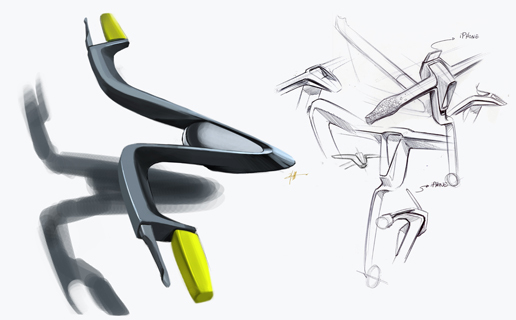
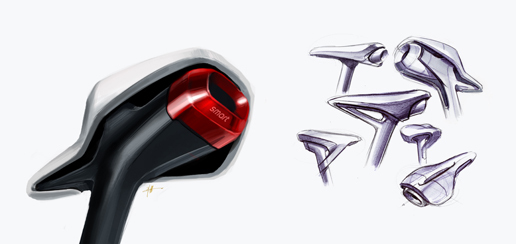
The Smart ebike by Hussein Al-Attar
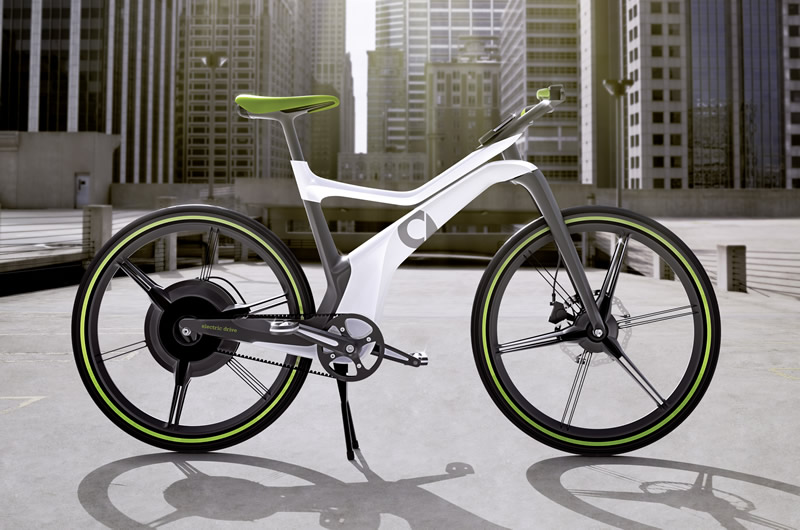
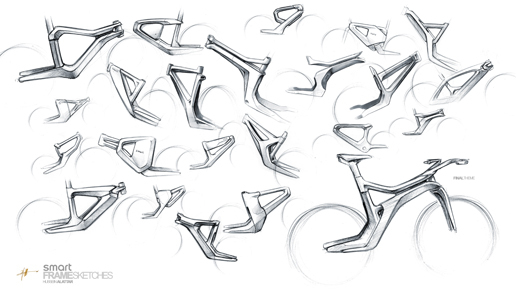
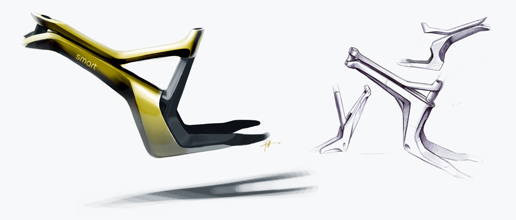
Hussein posted several images of his concept bike prototype on the German Car Forum. He explains in his post that after an internship in 2009 and 2010 at Audi’s design studios in Ingolstadt, Germany, he had the chance to do another internship at Mercedes-Benz Advanced design studio in Sindelfingen. During that second internship, he was asked to design an electric bike in collaboration with Grace, a Berlin based bike company. He started the project in June, and it was so well received that his employers wanted to show a prototype at the Paris Motorshow in October. Knowing that, I think the resulting bike is pretty amazing. I can imagine that a lot of late nights went into making this bike a reality in time for the show.
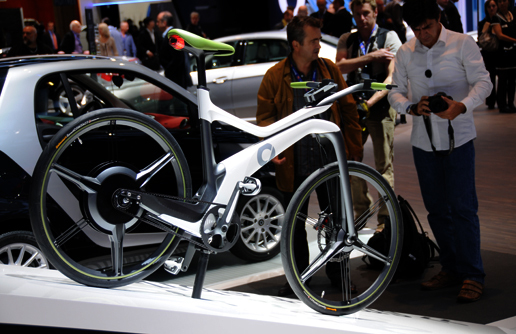
I am not usually a big fan of bikes from car companies, but this one is an exception. It is pretty impressive for an intern who never really planned to design an electric bike. The result shouldn’t really come as a surprise though. As I have said before, sometimes the fresh perspective that a talented designer outside the bicycle industry can bring to a project is a good thing.
Images via Behance Network and German Car Forum
Posted in Concept, E-bike, Tradeshows.
Bicycle Design
Sustainable Refrainables A Poster Design Competition

CHALLENGE
Create a poster that communicates the phrases that help designers move their clients and the public toward sustainable design and business solutions.
BACKGROUND
Core77 is collaborating with the San Francisco chapter of AIGA to support their fourth biennial Compostmodern conference. The conference, dedicated to promoting and inspiring sustainable design solutions, is geared to established design firms and advertising agencies, emerging designers, design students and strategists who are interested in cultivating sustainable design by becoming catalysts for cultural, social and ecological transformation. Compostmodern 2011 will explore the current and future potential for ecologically sustainable growth and responsible design, focusing on real world solutions and practical applications of design thinking.
TASK DEFINITION
“Sustainable Refrainables” is a poster design competition celebrating words of persuasion. Designers tell stories. We use those stories to convey complex ideas in an engaging and meaningful way. One of those most complex ideas we deal with is about sustainable design—how to do it creatively, and how to garner support from our clients to do it effectively. Frameworks can get dry very quickly. Case studies can only take you so far. Often times, what we really need is a powerful opening salvo to jumpstart the dialogue.
The Compostmodern Core77 Design Competition invites designers to share those mantric phrases they find most powerful in communicating positive action. Maybe the phrase is something as simple as “I never use the word ’sustainability.’” or “The first rule is listen. The second rule is to ignore what you heard and do it better.” or “There is no silver bullet, just silver buckshot.” Whatever your magic phrase, design it up in poster form, upload it to the competition site, and comment on your favorites. We’re looking for your most graphic, persuasive quotables!
Since the competition platform is collaborative and iterative, if you’re a great wordsmith but not a visual designer, share your words and phrases on the site and perhaps find a designer to work with. On the flipside, if you see the solution but don’t know how to state it, feel free to share your vision and partner with a writer!
JUDGING CRITERIA
Originality, point of view, graphic design, persuasiveness
PRIZES
Five participants will be awarded prizes.
One participant selected by the jury will receive $500 and a copy of Adobe’s Creative Suite 5 Master Collection
The audience favorite will receive $500 and a copy of Adobe’s Creative Suite 5 Master Collection
Three additional participants selected by the audience votes will also each receive a copy of Adobe’s Creative Suite 5 Master Collection.
Bonus: All five winners will have their posters produced as transit shelters that will be displayed in San Francisco for one week prior and during Design Week in San Francisco, June 13-19, 2011. Posters will also be produced and awarded to the winning designers.
SPONSORS
We are grateful to Adobe for making this competition possible and to Clear Channel for providing transit shelter space for this competition.
MANDATORY REQUIREMENTS
You should upload your poster design file with the following specs:
Width: 9″
Height: 12″
Bleeds: 1″ all around
Resolution: 300 dpi
NOTE: You may want to prepare your artwork at a higher resolution (adhering to the same 9×12 proportions however) and have that ready in the event that your entry gets selected as one of the winners. Winners will be contacted with further details.
SCHEDULE
Competition platform open for entries: November 1, 2010
Competition Closed: January 2, 2011
Voting Closed: January 7, 2011
Winners Announced: At Compostmodern Conference, January 22, 2011
Getting Started in the Core77 Design Arena
- Sign Up and activate your account.
- Select the Contest you want to join from the Contest Overview and read the Briefing
- Check out ideas, rate and comment - Collect Karma!
- Next: Submit your own ideas!
- Still need help? Browse our Support Center or ask the Support Team.
Give Water: Teague's Campaign for Clean Water
In response to the impending water crisis, design firm Teague set out to help visualize domestic water use in an effort to identify opportunities to use less. Water bills may contain statistics on how much is used, but not where it is being overused. To make this apparent, they designed a meter that is integrated with points of use throughout the home—faucets— that provides this information via WiFi.
In the first trial run, the meter was hooked up the the studio kitchen faucet and usage was monitored from computers at the studio desks, which resulted in very slight improvements. Upon moving the data onto an iPad on display by the sink, however, reductions were extreme— 1.5 gallons were saved in a single task like handwashing.
Visualizing all the water that could be saved spurred Teague to start a campaign to help with water crises thousands of miles away—not by shipping gallons of water, but by sending money, with $20 enugh to provide one person 20 years worth of clean water. Teague is working with the nonprofit Charity: Water on a 3 month campaign to raise $10,000 for clean water projects; they'll match every dollar donated with a dollar from Teague.
Learn more and donate here.
Core77
The Dutch Invertuals Transform Medieval Oak Wood into New Design Projects


Top: 600 year old oak timber. Bottom: Julien Carretero's Matchsticks.
This year, the group of designers behind the loose collective Dutch Invertuals had the opportunity to work with a magnificent material: Oak wood that dates back to Medieval Times, forming the foundation to the EIndhoven city entrance over 600 years ago, and excavated only recently.
Each individual studio has conducted their own experiments and research, "translating the value and symbolism of the wood into contemporary design project," focusing especially on ideas bout time and the oak's unique material properties. They exhibited their findings together at a show entitled Matter of Time during Dutch Design Week.


Max Lipsey, for example, engages the wood with a habit of working that dates back to the moment the trees were felled. He built a "Shave Horse" and collection of related tools, emobdying the "intelligence and thoughtfulness of the maker's hand" in the final result.


Meike Meijer has made alternative time pieces based not on the winding and ticking of gears, but on volume, weight and temperature, keeping time in a relative manner.


Raw Color has combined handmade papermaking techniques with digitization, to represent the 'smallest fibre" of the wood. A drawing machine will add year rings to the kernel of form as each piece is produced.


EDHV explores what sort of information cab be distilled from the excavated oak, attaching pencils to its slices in an attempt to "visualize the identity of this symbolic wood."

Caroline Wilcke focused on the tactile properties of the material, creating a series of objects for touching.

Daphna Isaacs and Laurens Manders created a table that shows the original use of these logs as a foundation. Encased in the table top is a fragment of a map from the site of discovery.

And finally, Juliette Warmenhoven illustrates the imminent decision to either preserve the wood or let it rot, a moment only uncovered in its excavation.

The Dutch Invertuals was founded by Wendy Plomp. Read more about their work and collective philosophy here. We love the portraits of the group that come with every show— this time, they've stuck their fingers, ears, and noses through holes in the wood.


All Images by Bart Hess.
Coroflot 2010 Designer Salary Survey: Compare your Earnings!

10 years running, Coroflot launches its annual Designer Salary Surveytoday featuring real-time results. Take the survey and compare your earnings against others in the industry. Has a slowly growing economy shown improvements in the creative design fields? Find out now, and don't forget to share this with your colleagues too!
Inside the San Francisco Fire Department's ladder shop

Sharp-eyed residents of San Francisco may notice something unusual about their city's emergency services: The ladders on all of the fire trucks are made of wood, not metal. Why? In a city with low-hanging power lines, non-electricity-conducting wood is a safer choice than metal.
This awesome video by Ask Media Productions takes a look inside the the SFFD's ladder shop, where they repair and build ladders up to fifty feet in length out of Douglas Fir. The resultant ladders can weigh up to 350 pounds (which actually makes them more stable in a crosswind) and are built to last for more than a lifetime: The oldest ladder the SFFD has in service is from 1918, making the 92-year-old object older than anyone in the department. And to say they are carefully constructed is an understatement, as the raw wood must spend fifteen years in the shop, acclimating to the local humidity, before they are deemed worthy raw material.
Inside the Ladder Shop at the San Francisco Fire Department fromAdamKaplan on Vimeo.
Core77
30/10/10
Imperial Flatboy Motorcycle
Star Wars influence? Inspiration taken from Daniel Simon? Yessir, indeed. This is a motorcycle concept going by the name “Bugatti startos” designed by Bruno Delussu. This name, Bugatti startos, means “Snake Road,” a fabulous name for a rather snake-like automotive. With a body made of fiberglass to make the entire thing light, setting the rider in the same place as a racing bike (lying on the bodywork,) and a cute traditional speedometer.
Believe it or not, this motorcycle uses an internal combustion engine, NOT an electric. Wow, I never thought, but always hoped, that this day would come. A day where the designer has to explain themselves for having anything other than an energy-conscious engine. Welcome to the future of responsible thinking? I hope so. Some words from Bruno Delussu:
Being a motorcyclist myself, I love the sound of a motorcycle engine (reminiscent of a raging lion), so the engine is a traditional internal combustion engine rather then electric, as the new trend would have it (a matter of ecology)
Also, Bruno notes that this project is mainly a fun one, and that thusly this is the world’s first motorcycle with no method for steering. Straight only!
Designer: Bruno Delussu


Yankodesign
Four Flavored Butter Spoon
Designer: Yeongkeun Jeong


Yankodesign
