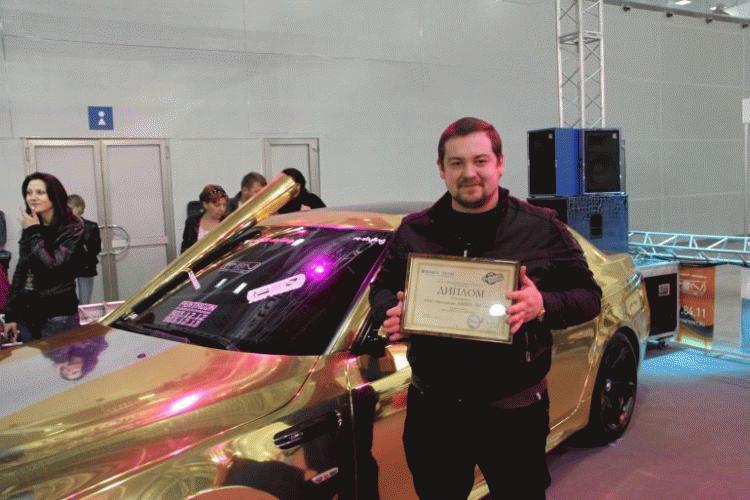
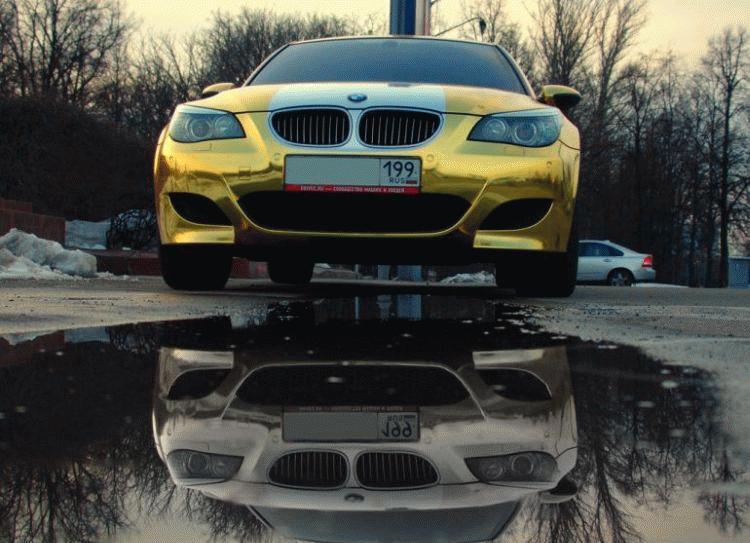
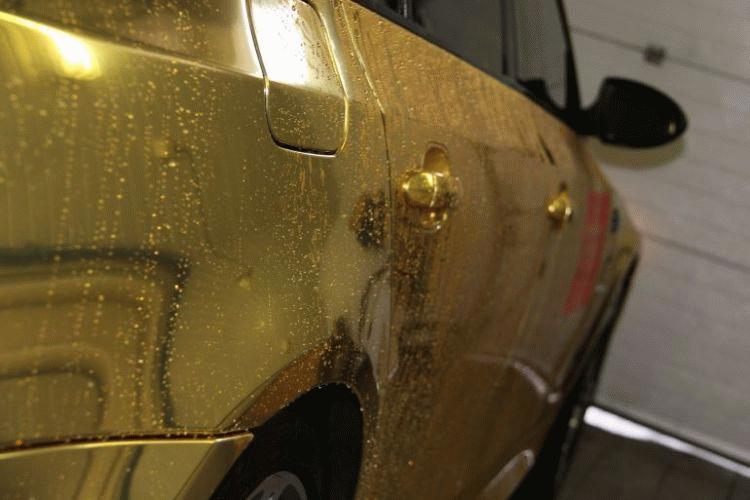
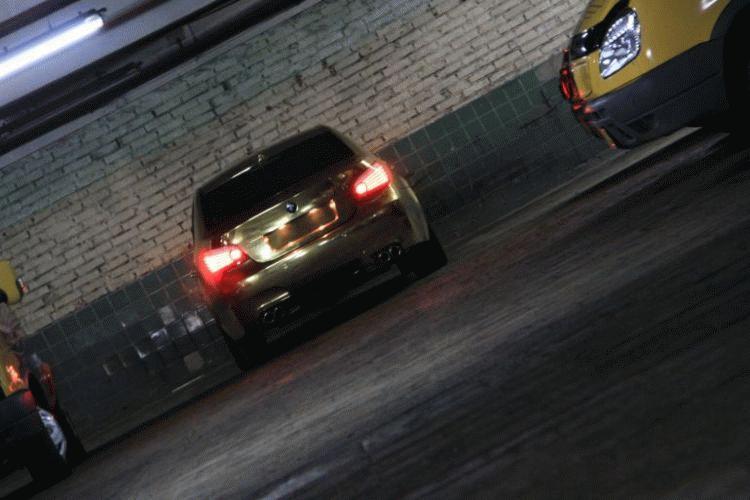
Gần đây, giới hâm mộ xe hơi không khỏi choáng váng khi được chiêm ngưỡng chiếc xe Porsche 911 Cabriolet dát đầy vàng xuất hiện tại Nga. Giờ đây, họ lại được "mãn nhãn" với chiếc xe BMW M5 phủ vàng lấp lánh xuất hiện trên đường phố Moscow.
22/8/10
Choáng váng với BMW M5 dát vàng lấp lánh
Tivi Beo Vision 7-55: Đắt nhất VN
![]() |
Chế tạo tinh xảo và ứng dụng công nghệ hình ảnh tiên tiến nhất, BeoVision 7-55 mang đến những trải nghiệm hình ảnh ấn tượng, kết nối và điều khiển đa dạng cho người dùng.
>>Xuân Trinh
Tivi BeoVision là dòng sản phẩm thế mạnh và đa dạng nhất của B&O. Mẫu tivi BeoVision 7-55 được giới thiệu gần đây trưng bày những cải tiến trong kiểu dáng thiết kế, công nghệ hình ảnh và giải pháp âm thanh. Nó không chỉ mang đến những giây phút giải trí HD mà còn là món đồ trang trí nội thất làm đẹp cho căn phòng.

KIỆT TÁC CÔNG NGHỆ
Sản xuất đầu năm 2010, BeoVision 7-55 là tác phẩm của thiết kế gia David Lewis (người có nhiều năm hợp tác với B&O trong lĩnh vực thiết kế công nghiệp). Ngay từ cái nhìn đầu tiên, nhiều người sẽ không thể cưỡng nổi vẻ đẹp và sức hấp dẫn về ngoại hình của chiếc tivi 55inch này. Nó long lanh, sắc xảo và chuẩn xác đến từng chi tiết khiến người ta phải “đụng chạm”. tìm hiểu và khám phá tức thì.
BeoVision 7-55 trông khá chắc chắn. Độ dày 18,5cm đảm bảo “an toàn” cho chiếc tivi có trọng lượng gần 80kg. Tuy nhiên, David Lewis vẫn tạo ra hiệu ứng siêu mỏng nhờ thiết kế nhiều lớp của BeoVision 7-55. Tấm kính dày khoảng 1cm choán toàn bộ mặt trước của tivi trông như tách rời phần bệ bằng nhôm ở phía sau. Thiết kế này khiến nhiều người lầm tưởng BeoVision 7-55 chỉ mỏng như một tấm kính, nhất là đặt tivi chìm trong tường. Loại kính mà BeoVision sử dụng làm bằng thủy tinh cao cấp với độ phẳng gần như tuyệt đối. Nó được tráng phủ lớp chống lóa ở hai mặt có tác dụng giảm lóa và chói của ánh sáng nội thất, đồng thời mang đến chất lượng hình ảnh tốt ở những góc nhìn hẹp. Hơn thế, chất lượng chế tạo còn thể hiện qua những chi tiết và bề mặt bằng nhôm của chiếc tivi này.
Màn hình độ phân giải cao đặc biệt thích hợp với những người thích xem phim HD. Để đáp ứng nhu cầu giải trí ngày càng cao của khách hàng, B&O đã tích hợp đầu đọc đĩa Blu-ray trên tivi ở bên dưới màn hình và nằm kín đáo trong phần vỏ bằng nhôm. Chỉ cần bấm nút ở bên dưới màn hình hoặc trên bộ điều khiển từ xa, khay đĩa (bằng nhôm) sẽ hoạt động theo cách đặc biệt. Hai LED nhỏ gắn trên khay đĩa sẽ tự động phát sáng, giúp người dùng đặt đĩa dễ dàng và tiện lợi hơn.

Trải nghiệm hình ảnh luôn đi cùng với chất âm tuyệt đỉnh và cực mạnh từ bộ loa BeoLab 7. Nhóm chuyên gia của B&O lựa chọn bộ loa nằm ngang không chỉ tạo sự vừa vặn với thiết kế của BeoVision 7-55 mà còn mang đến chất âm có sức lan tỏa theo chiều ngang.
Tivi và loa đặt trên bệ đỡ chắc chắn. Hai chân hình trụ bằng nhôm đặc gắn với khung tivi có thể điều chỉnh độ cao khi lắp đặt. Thêm nữa, BeoVision 7-55 còn có khả năng điều chỉnh hướng của màn hình. Toàn bộ quá trình này được thực hiện bằng tay hoặc thông qua điều khiển từ xa.
BeoVision 7-55 sử dụng những công nghệ tivi mới nhất của B&O. Màn hình LCD TFT LED backlight 55inch theo tỉ lệ 16:9 với độ phân giải full HD 1920x1080, tần số quét 100/120Hz cùng công nghệ xử lý VisionClear cho hình ảnh sắc nét. Thời gian khởi động khoảng 6mili giây.
TRẢI NGHIỆM HD
Phòng thử có diện tích 12m2 được trang bị tivi BeoVision 7-55, một cặp loa BeoLab 5 và một cặp BeoLab 2 để tạo nên hệ thống âm thanh stereo 5.1 và 7.1. Không gian ánh sáng được xử lý với những đèn chiếu hắt hiu nhẹ và toàn bộ phòng nghe được bọc kính để giảm tiếng ồn. Ngoài kết nối với nhau, tivi và loa kết nối với nguồn tín hiệu khá đơn giản và đồng bộ thông qua dây cáp của B&O. Tivi sử dụng tín hiệu HD từ kênh VTC HD và đầu Blu-ray. Việc lựa chọn nguồn phát tín hiệu và điều khiển tivi được thực hiện thông qua remote đa năng Beo4.
Thử với các kênh truyền hình VTC HD, những cảnh quay về thế giới động vật và thiên nhiên hoang dã được thể hiện xuất sắc với độ nét cao đúng chất HD. Dù ngồi ở vị trí nào, BeoVision vẫn cho hình ảnh tối ưu với độ loa rất thấp, đặc biệt dịu mắt nhờ tấm kính lọc. Với tần số quét khá cao 120Hz, BeoVision 7-55 tạo hình ảnh chuyển động mượt mà, liên tục.
Xem phim HD còn ấn tượng hơn nữa. Để thử nghiệm âm thanh của bộ loa BeoLab 7, chúng tôi sử dụng đĩa phim Blu-ray The Fast and the Furious. Cửa đĩa mở ra nhanh chóng và sanhd điệu sẵn sàng cho xem phim. Sau thời gian load đĩa, người dùng có thể chọn bất cứ trường đoạn nào để thử nghiệm phẩm chất của chiếc tivi Đan Mạch này. Những màn đua xe và driff với tiếng động cơ, rít phanh và nẹp pô sống động và mạnh mẽ. Hiệu ứng âm thanh stereo rất tuyệt khi nối ra hệ thống BeoLab 5 (hệ thống 5.1) và bổ sung thêm hai loa vệ tinh BeoLab 2 (hệ thống 7.1). Tăng âm lượng lên mức trung bình, âm thanh như dồn dập ở mọi nơi. Với hệ thống BeoVision và BeoLab như vậy, trải nghiệm trong những rạp chiếu phim hiện đại nhất Việt

BeoVision 7-55 không có nhược điểm khiến người dùng phải phàn nàn về thiết kế và kỹ thuật, kể cả những người khó tính nhất. Giá trị sử dụng của BeoVision 7-55 khá đa dạng: không chỉ để xem TV, phim HD mà còn như món đồ trang trí nội thất đắt tiền.
Giá bán là “nhược điểm” duy nhất của BeoVision 7-55. Tuy nhiên, với những khách quen của B&O, giá cả chưa phải là điều quan nhất. Bởi mua sản phẩm B&O nói chung hay BeoVision 7-55 nói riêng không đơn thuần đáp ứng nhu cầu giải trí cao cấp mà còn khẳng định phong cách thượng lưu và gu thẩm mỹ của người sở hữu.
Bài viết được hoàn thành với sự hỗ trợ của Nhà phân phối chính thức của Bang & Olufsen tại Việt
Theo Nghe Nhìn
Using Design to Drive Innovation Designers must deliver the orchestration of the total experience with a brand, product, or service or face irrelevanc
In a previous era, all the talk was of strategy, strategy, strategy. More recently, it's been innovation, innovation, innovation. As design thinking seems poised to sweep away some of today's celebrated innovation practices, we must be wondering what new provocation is on the horizon. Relax, I'm not planning to conjure one up.For those of us on the design consulting side of the business, it has not exactly been a smooth ride lately. But then again, I can't say that I ever remember it being all that smooth, even when the demand for all forms of basic design and new production capability was sky-high.
Having lived one career on the corporate design side of the consumer-products industry and now a good part of another on the consulting side, I've seen the ascendancy of design as a profession and the movement of design toward business competency. At the outset, designers were about style and the creation of bright shiny objects, and we dutifully manned our post at the last decoration station on the way to the marketplace.
Today, there are arguably two design strategies in the marketplace. You either succeed as the low-cost producer, or you successfully differentiate your offering by design in a relevant, meaningful way that is valued by shoppers, consumers, and sellers. As such, the theoretical role of design in business is relatively uncomplicated and straightforward.
DESIGN IN BUSINESS
The complications come with these two questions: Where does the core idea around a differentiated, relevant, valued offering come from? And what is its relationship to this thing we used to call design? You know—the bright shiny objects.
In our practice, we refer to the former as innovation strategy, and to the latter as design strategy. Somewhere in between resides the opportunity for brand strategy, and we hope to create a system in which there is a seamless flow from ideas to brand meaning and, finally, to how that brand or product or service is expressed and communicated.
Putting all three aspects of this brand-building practice together provides validity in thinking about design as one of the primary idea generators for the creation of viable business platforms. Assuming that the manifestation of a business offering is realized in the context of a brand, that brand requires meaning, a defined expression, and then, given some success, a plan for continued opportunity development that sustains and grows the business.
HOW TO INNOVATE
True innovation requires the adoption of a belief system that sometimes must prevail in the face of other data metrics. Read up on the great inventions and business wins and you will note that at the core of most of them lie belief, dedication, and the passion to succeed. Today's business leaders are often too afraid to move ideas forward without ironclad data proofs that they will be successful. All too often, they are the losers. Use your head, listen to your heart, and feel what's in your gut.
As long as the human spirit and the marketplace lives on, I'm sure we will be inventing and innovating. Innovation is the commercial side of discovery and invention. Change is a huge driver of both discovery and invention. The world changes around us and we discover new things and we observe change and invent new things to deal with change.
If designers are content to function as purveyors of bright shiny objects, they will likely fade into obscurity. On the other hand, if they step forward and deliver the orchestration of the total experience with a brand, product, or service in the context of our changing environment, their future, too, looks bright.
Provided by Design Management Review—This is an edited version of an article that first appeared in Design Management Review, which explores how great design provides long-term competitive advantage in a changing world. The Review was founded in 1989 and is published quarterly.
Bussinessweek
Fiat Has a Lot Riding on a New Jeep Cherokee
The redesign of the Jeep flagship will be an important test of the Italian automaker's chances for turning Chrysler around
Jeep has frustrated a string of corporate owners since its 1941 debut as an all-purpose vehicle for the U.S. Army. From Willys-Overland Motors, developer of the civilian model, through Kaiser Jeep, American Motors, Renault, Chrysler, DaimlerChrysler, and Cerberus Capital Management, each new steward of the brand tried, with varying degrees of success, to win over mainstream drivers without alienating off-road enthusiasts. In the U.S., Jeep's sales peaked at 554,466 in 1999; last year, they sank to 231,710 as Chrysler went through a $12.5 billion government-backed bankruptcy.
Now it's Fiat's turn. The Italian automaker, which took control of Chrysler when it emerged from bankruptcy, is counting on the 2011 Jeep Grand Cherokee to reverse the slump. The new model, which began arriving in showrooms in late June, features plenty of luxury touches—leather seats, interior wood trim, a heated steering wheel. Options include satellite television and technology that turns the vehicle into a Wi-Fi hotspot.
The breakthrough feature is an adjustable suspension system that enables the SUV to achieve 10.7 inches of ground clearance, allowing the kind of off-roading experience many buyers expect from a Jeep. Prices start at $30,995—about $500 cheaper than its predecessor. The priciest version costs $42,995.
The redesigned Jeep is the first major new model Chrysler has introduced since Fiat assumed control and is crucial to the company's turnaround plans. "Jeep is arguably one of the most important brands for the company because of its global appeal, and Grand Cherokee is the Jeep that makes them the most money," says Rebecca Lindland, an analyst at IHS Automotive. "This is a company that is coming out of major surgery, and every setback is a threat to survival."
The Italian automaker has set a target of selling 800,000 Jeeps a year worldwide by 2014, up 61 percent from 2008. "The Grand Cherokee is a sign we're moving toward a broader appeal," says Michael Manley, head of the Jeep brand and Chrysler's international operations.
Jeep's previous owners failed to anticipate the late-1990s shift to carlike SUVs such as Honda Motor's (HMC) Pilot and Ford Motor's (F) Escape, says Dennis Pietrowski, managing director of market researcher RDA Group. On top of that, quality concerns have dented Jeep's image. It placed 27th out of 33 brands in J.D. Power and Associates' ranking of initial quality released on June 17. Jeep defectors also frequently cite poor fuel economy and a rough ride among their justifications for ditching the brand.
That's one reason the new Grand Cherokee has been engineered with improved suspension and handling. A new V-6 engine will boost mileage by 11 percent. Chrysler wants to make Jeep the "No. 1 SUV brand again," says Manley, and is determined not to let the Grand Cherokee become a "niche" vehicle.
One thing riding in Fiat's favor is the Italian automaker's global reach—Chrysler currently sells 90% of its cars in North America. Starting next year, Jeep will be the only Chrysler brand sold around the world, as Fiat plans to rebadge other Chrysler models as Lancias in Europe. Says Manley of Jeep: "With our partnership with Fiat, we can now focus on Jeep as an international brand."
The bottom line: The redesign of Chrysler's flagship Jeep model will be an important test of Fiat's ability to turn around the ailing American carmaker.
Green is a reporter for Bloomberg News .
Businessweek
Dan Hill on the World Design Congress in Beijing

In a seven part series, designer and urbanist Dan Hill, research leader at ARUP and author of the acclaimed blog City of Sound, reports at length on last year's World Design Congress in Beijing.
Needs-Based Innovation Reigns
Companies should adopt an innovation process based on customer needs rather than coming up with "big" ideas and then testing them out. Pro or con?

PRO: INNOVATION IS A PREDICTABLE PROCESS
by Tony Ulwick, Strategyn
After working on the IBM (IBM) engineering team for the failed PCjr, I realized there must be a better way to guarantee a product or service’s success at launch. What I have found during the past 20 years of study and research is that most companies lack a disciplined, predictable business process for listening to customer needs and turning them into true innovation.
Where most companies fail is in their thinking that innovation starts with an idea, when the reality is that only one in 14 million ideas is right the first time. Companies go through numerous product concept iterations to try and get it right, and the success rate using this approach is less than 20% and requires way too much time. Take Dyson, for example. The company went through 5,000 iterations for a vacuum before it was brought to market as you see it today. Imagine what Dyson could have accomplished if its innovation team had known on the first version of the product what it did on the 5,000th.
Just as doctors need to know the symptoms of their patients before they can make a diagnosis, companies need to know the needs of their customers before they can develop the right solution. Fortunately, there is a way for companies to know what those customer needs are before they develop the idea—resulting in success rates upwards of 80%.
In this era of economic turmoil, the risks are even bigger. Companies can no longer rely on randomly generating ideas in hopes of finding the next big idea. Instead, companies should start with a clear understanding of the needs they are trying to fill; then they can develop the right, innovative solution to meet the customers’ needs.

CON: DETERMINING THE RIGHT VALUE MATTERS MORE
by Jeff Thull, Prime Resource Group
Starting with the customer’s need sounds like a smart idea, but who defines the need? The voice of the customer can be dangerously flawed and the voice of the internal engineer with the next big idea can be even more errant. That’s why innovators need to come up with ideas first, then assess the net value impact they will have on the customer’s business and life.
What is needed is an accurate process to measure the true value of the big idea in order to see if it can demonstrate enough value to be the right idea. We need to consider where the new product or service fits within a value network. We need to think beyond the value chain. Think of the iPhone and iPad innovations: What are all the points of value, and who is really affected and to what level? The members of the value network include Apple (AAPL), AT&T (T), application developers, business subjects of the apps, and the media. Steve Jobs envisioned a broader value network for open innovation, one where his platforms would coalesce the best energies of hundreds of thousands of developers and customers seeking new experiences. He knew the real key to turning the big idea into the right idea was to create value across the broader network.
It’s more than recognizing a customer need. The big idea, and ultimately the right idea, will recognize the network of needs and begin by assessing the value impact it can, and hopefully will, have on all members of the value network and the ultimate customers.
Businessweek